
October 15, 2026
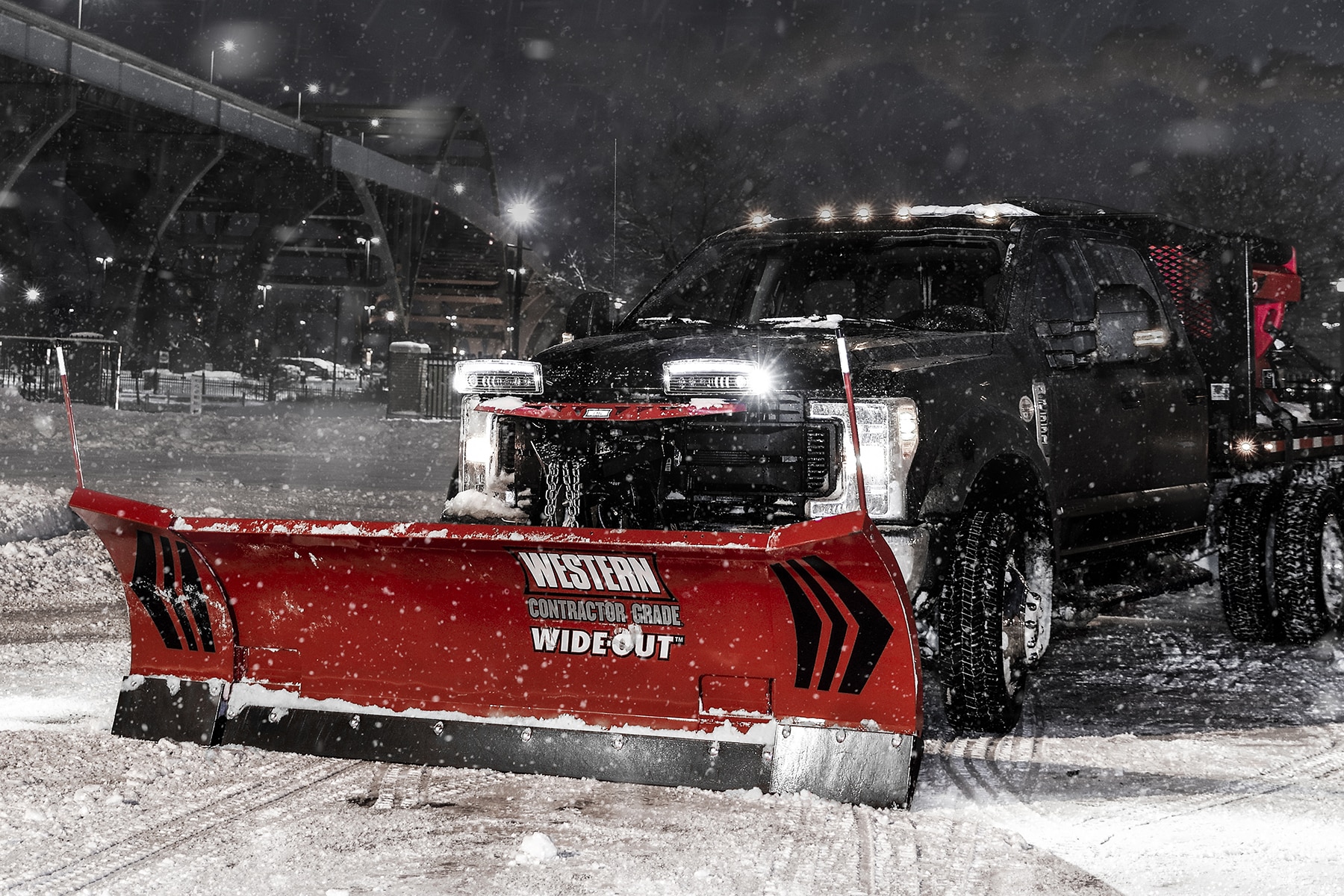
There is no single “winter truck setup.”
A contractor clearing private lots has different needs than a municipality maintaining miles of roadway. A business treating sidewalks and small parking areas does not need the same equipment as a crew handling large commercial properties.
That is why choosing winter equipment should start with the work, not the equipment catalog.
Before buying a plow, spreader, or complete snow and ice setup, take a closer look at what the truck will actually be expected to do.
The first question is not “Which plow should I buy?”
It is: What are you clearing?
Think about:
A straight blade may work well for straightforward plowing applications, while a V-plow or winged setup may provide more flexibility for larger or more complicated areas.
Clark Truck offers snow plow and spreader options for pickups, commercial trucks, municipal vehicles, UTVs, tractors, and skid steers, giving businesses and municipalities options based on the size and type of work being performed.
If the primary job is physically moving snow, the plow is the center of the setup.
A plow may be the priority when your operation is responsible for:
The important part is matching the plow to both the truck and the workload.
Vehicle capacity matters. So does the shape of the property, the amount of maneuvering required, and how often the equipment will run.
A plow that is oversized for the truck can create problems. A setup that is too light for the workload can create a different set of problems.
Plowing removes snow, but snow is only part of winter maintenance.
Ice, refreezing, and slick surfaces often require material application as well.
INDOT’s explanation of winter operations describes three parts of winter road treatment: anti-icing before a storm, mechanical plowing, and de-icing with materials that help break or prevent the bond between snow or ice and the pavement.
That same basic idea applies on a smaller scale to commercial winter operations.
A spreader may be especially useful for:
Clark Truck offers both light-duty and heavy-duty spreader solutions depending on the vehicle and application.
Not every spreader is designed for every vehicle or every material.
Truck size, payload, hopper capacity, mount type, and spreading material all matter.
For example, the WESTERN Spreader Selector organizes compatible spreaders based on vehicle type and the material being applied, including bulk salt, bagged salt, sand, salt/sand mixtures, and liquid brine.
That is a useful reminder that spreader selection should not be based on capacity alone.
Before choosing one, ask:
The answers can narrow down the right setup quickly.
For many snow and ice operations, the answer is yes.
A plow handles accumulation. A spreader handles traction and ice control. Together, they allow a truck to perform more of the winter maintenance process without depending on separate vehicles.
A combination setup may make sense when:
However, that does not mean every truck needs both.
If your operation has dedicated plow trucks and dedicated material trucks, specialization may make more sense. The right decision depends on fleet size, route design, staffing, payload, and workload.
A spreader is only useful if it applies material accurately.
Clark Truck’s article on why salt spreader calibration matters before the first winter storm explains how application rates can vary based on equipment settings, material, operating conditions, and other factors.
Applying too little material can reduce effectiveness. Applying too much can waste product and increase operating costs.
That makes preseason calibration part of preparing the truck, not an optional extra after the equipment is installed.
The plow and spreader may get the attention, but they are only part of a winter work truck.
Depending on the application, you may also need:
Clark Truck carries a range of truck accessories for plows and spreaders, including accessories for Henderson spreaders and Western and Henderson plow systems.
A winter truck works best when the entire setup is planned together instead of adding one component at a time.
Indiana winter maintenance can require long hours and repeated passes.
INDOT reports that during winter storms, its crews may operate alternating 12-hour shifts and repeatedly plow routes until travel lanes are cleared. INDOT’s winter operations page also explains how plowing, salt, and brine work together as part of winter road maintenance.
Your operation may be much smaller, but the same principle applies: winter equipment needs to be reliable enough to work when conditions are at their worst.
That is why October is a better time to test, inspect, and service equipment than the morning of the first storm.
Before winter:
Clark Truck’s service team handles snow plow service and repair along with other commercial truck equipment service.
A preseason inspection gives you time to fix something before every other snow operator needs the same part or appointment.
A plow does not automatically make a truck winter-ready. Neither does a spreader.
The right setup comes from understanding the route, surface, material, workload, truck capacity, and crew.
For one operation, that may mean a simple straight blade. For another, it may mean a V-plow and hopper spreader. A municipality may need an entirely different heavy-duty configuration.
Clark Truck Equipment can help match the truck, plow, spreader, accessories, and service needs to the work the vehicle actually has to perform.
October is the time to make those decisions, while there is still time to be ready before the first storm.