
May 1, 2026
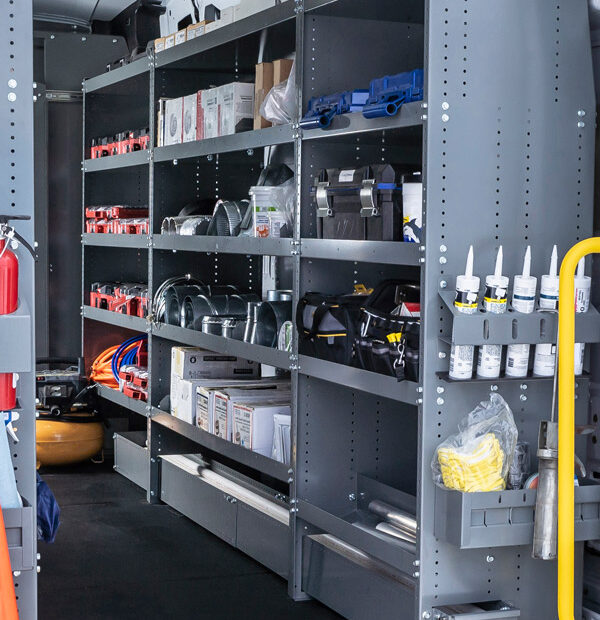
When most people think about jobsite downtime, they think about major problems like equipment failure, delayed deliveries, or bad weather. But in reality, a lot of wasted time comes from smaller frustrations that happen over and over again throughout the day.
A misplaced tool.
A cluttered cargo area.
A crew member digging through equipment to find one item.
An extra trip because materials were not loaded efficiently.
Those issues may seem minor in the moment, but over the course of a week or season, they add up. For contractors and service teams, better van storage is not just about keeping things neat. It is about helping crews move faster, stay organized, and get more done with less frustration.
Downtime is not always a vehicle sitting completely idle. Often, it shows up in small ways that chip away at productivity:
crews spending too long looking for tools
equipment getting damaged because it was stored poorly
repeated unloading and reloading to reach the right items
wasted motion at every stop
preventable delays caused by disorganization
Clark Truck already points to this in its blog about upfitting your fleet with accessories, van bodies, and lifts, where storage, accessibility, and functionality are positioned as real contributors to workflow. A well-designed van does more than carry equipment. It supports how the work gets done.
Sometimes the biggest inefficiencies have become so normal that crews stop noticing them. If any of these sound familiar, your setup may be costing you more time than you realize.
When equipment gets stored wherever it fits, people waste time hunting for what they need.
If the same open space is being used for tools, parts, materials, and equipment, access gets messy fast.
Rain, mud, and road grime can damage tools and materials when storage is not protected or organized properly.
That is a strong sign the layout is working against the job.
Poor organization often makes a van feel less capable than it really is.
Good storage improves more than appearance. It can improve speed, safety, and consistency on the job.
Better storage can help crews:
access tools faster
reduce wasted motion
protect valuable equipment
keep materials more secure in transit
present a more professional image on site
That is part of the value of a purpose-built van setup. Clark Truck’s van bodies offer enclosed storage solutions for teams that need better protection from the elements, more secure organization, and easier access to equipment throughout the day.
Not every improvement requires a complete overhaul. In many cases, the biggest gains come from choosing the right van layout for the work being done.
Some of the most useful upgrades include:
shelving systems for tools and parts
drawer units for smaller equipment
partitions to separate the cab from the cargo area
ladder racks for larger or longer items
enclosed storage zones that match day-to-day workflow
If your crew works out of the van all day, the way things are stored affects almost every part of the job.
For a broader industry perspective, the NTEA’s vehicle upfitting considerations are worth reviewing. They reinforce the idea that body configuration, equipment integration, and how the vehicle is actually used all affect performance and safety.
For many businesses, a van body is a strong fit because it offers enclosed, secure storage with better protection from weather and more organized access to tools and materials.
A van body may be a good option if your team:
carries a wide range of tools
needs lockable, organized storage
works in the field at multiple stops each day
wants to protect equipment from the elements
needs a cleaner, more contained work environment
For service crews, delivery teams, and trades that rely on organized mobile storage, a van body setup can help reduce clutter and make daily operations more efficient.
For some businesses, especially those carrying weather-sensitive tools, materials, or equipment, enclosed storage is one of the biggest advantages of using a van body.
This can be especially useful for:
service trades
electrical and plumbing crews
delivery operations
teams carrying parts or equipment that need protection
crews that want a cleaner and more secure mobile workspace
A well-planned van setup makes it easier to protect what you carry and access it quickly once you arrive on site. If you are considering updates to your current vehicle, Clark Truck’s service team can help you think through the best setup for how your crew actually works.
Before making any changes, it helps to look honestly at how your vans are being used now.
Ask yourself:
What do crews waste the most time looking for?
What tools or materials are most difficult to access?
What gets damaged most often in transit?
Are crews moving equipment just to reach something behind it?
Would a better van layout improve workflow more than another accessory would?
Those answers can point you toward practical upgrades that actually make a difference.
A well-organized van does more than hold tools. It helps your team work with less friction. It makes stops faster, protects equipment, and reduces the little inefficiencies that quietly drain time from every day.
If your current setup is making jobs harder than they need to be, now is a good time to rethink it. Between Clark Truck’s van body options and its upfitting and service support, there are ways to build around how your crews really work, not just how the vehicle looked on the lot.